Falls are the single most common safety incident in care homes across the UK. Around one in three residents over 65 will fall at least once a year, and for many, it will happen more than once. The consequences range from minor bruising to hip fractures, head injuries, and in the worst cases, fatal outcomes.
But here is the thing that many care home teams already know but rarely hear said out loud. You cannot prevent every fall. What you can do is reduce the risk, respond properly when falls happen, and build a culture where falls prevention is part of everyday care rather than a box-ticking exercise for the next CQC inspection.
Understanding Why Residents Fall
Before you can prevent falls, you need to understand why they happen. And the answer is almost never just one thing.
Falls in care homes are usually caused by a combination of factors working together. Muscle weakness and poor balance are the most common underlying causes, particularly in residents who spend long periods sitting or lying down. Medication side effects play a significant role, especially sedatives, blood pressure medications, and drugs that cause dizziness or drowsiness. Urinary urgency drives many falls, with residents trying to get to the bathroom quickly, often at night, often without asking for help. Poor vision makes it harder to judge distances, spot obstacles, and navigate safely. Footwear that is worn, loose, or slippery contributes to more falls than most people would expect. And environmental hazards like wet floors, trailing cables, poor lighting, and cluttered corridors create trip risks that are entirely preventable.
In our experience, the care homes that manage falls best are the ones that look at all of these factors together rather than focusing on just one. A new pair of non-slip slippers will not help if the resident is also dizzy from their medication and trying to rush to the bathroom in the dark.
Falls Risk Assessment
Every resident should have a falls risk assessment carried out on admission and reviewed regularly, particularly after any fall, change in medication, or decline in mobility. The NICE guideline NG249 published in 2025 recommends a Multifactorial Risk Assessment for all care home residents, which is now the industry standard for 2026.
A proper falls risk assessment covers the resident’s mobility, balance, and gait. Their medication, particularly anything that affects blood pressure, sedation, or balance. Their vision and hearing. Any history of previous falls, including when, where, and what the circumstances were. Continence needs and whether urgency is a factor. Their footwear and whether it fits properly. Cognitive function, including whether dementia or confusion increases their fall risk. And nutritional status, since poor nutrition and dehydration can contribute to weakness and dizziness.
The assessment should lead directly to a personalised care plan that addresses the specific risk factors identified for that individual. A generic falls care plan that says “high falls risk, supervise mobility” is not enough. The plan needs to say exactly what is being done to address each risk factor, who is responsible, and when it will be reviewed.
Practical Prevention Strategies
Falls prevention in a care home is not about restricting residents or wrapping them in cotton wool. It is about making the environment safer and supporting residents to stay as mobile and independent as possible.
Keep walking routes clear. Corridors, doorways, and the path between each resident’s bed and bathroom should be free of clutter, trailing cables, and unnecessary furniture. This sounds obvious, but in busy care homes, things accumulate without anyone noticing.
Get the lighting right. Dim corridors and poorly lit bathrooms are a major trip risk, especially for residents with impaired vision. Night lights in bedrooms and along corridors make a real difference for residents who get up during the night.
Review footwear regularly. Worn-out slippers, loose shoes, and walking in socks or bare feet are all common fall contributors. Non-slip, well-fitting footwear is one of the simplest and most effective interventions available.
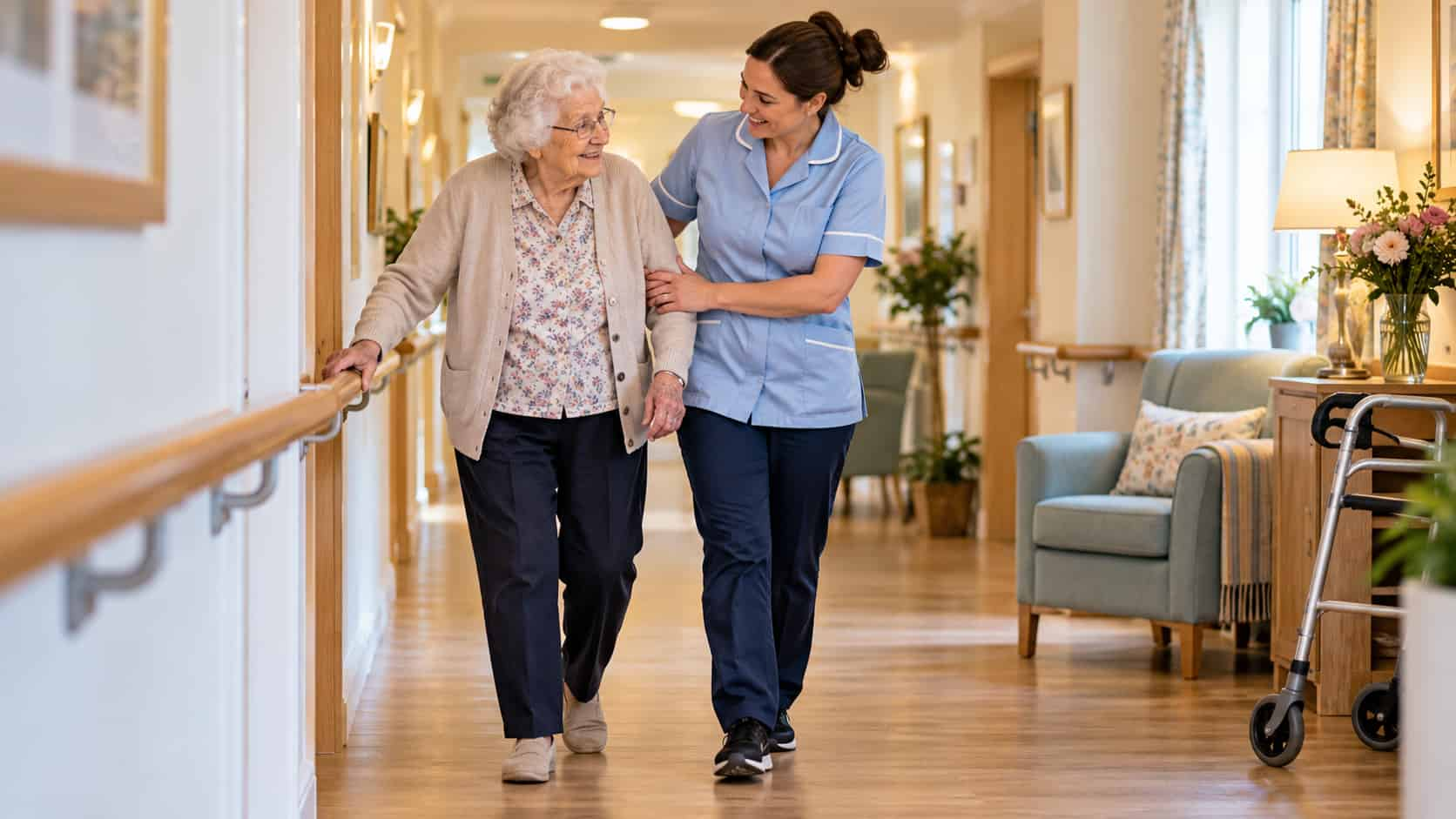
Support mobility rather than restricting it. Residents who are encouraged to stay active, with appropriate support, tend to maintain their strength and balance for longer. Those who are confined to chairs for most of the day lose muscle strength quickly and become more likely to fall when they do try to move. Where safe and appropriate, supported walking, seated exercises, and physiotherapy programmes help maintain the physical capabilities that prevent falls.
Manage medications proactively. Work with the resident’s GP to review medications regularly, particularly after a fall. If a resident is on multiple medications that affect balance or blood pressure, there may be alternatives that carry a lower falls risk.
Address continence needs. If a resident is falling because they are rushing to the bathroom, the solution is not to tell them to wait. It is to review their continence care plan, consider a commode or urinal for nighttime use, and ensure they can access the bathroom quickly and safely when they need to.
What CQC Expects
The CQC assesses falls management as part of its Single Assessment Framework, introduced in 2026. Inspectors will look at whether every resident has a documented, personalised falls risk assessment. Whether care plans address the specific risk factors identified. Whether falls are recorded properly, including the circumstances, any injuries, and what actions were taken. Whether the care home reviews falls data to identify patterns and trends. Whether medication reviews are carried out after falls. Whether the environment is regularly checked for hazards. And whether staff are trained in falls prevention and safe manual handling.
Under CQC Regulation 18, care homes must notify the CQC of serious injuries resulting from falls. Failure to report is a separate compliance issue and can result in enforcement action.
When a Resident Falls Despite Prevention
Even with the best prevention measures in place, falls will still happen. What matters then is how your team responds.
If the resident shows any signs of a fracture, head injury, or serious harm, call 999 immediately. Do not attempt to move them until they have been assessed.
For non-injury falls where the resident is conscious, alert, and not in pain, your team needs a safe way to get them off the floor. Attempting to lift a resident without proper training and equipment risks injuring both the resident and the staff member.
K4 Medical provides a dedicated non-injury falls response service across London and South East England. Our trained team attends with specialist lifting equipment, carries out a clinical assessment, lifts the resident safely and with dignity, and checks their wellbeing before leaving. This service helps care homes respond to non-injury falls quickly and professionally without calling 999 for situations that do not require an emergency ambulance.
For care homes that want to reduce 999 calls for non-injury falls, read our guide on how care homes can reduce 999 calls for falls.
If a resident does need hospital treatment after a fall, our patient transport service provides safe, comfortable medical transport to hospital appointments and follow-up care.
Building a Falls Prevention Culture
The care homes that manage falls most effectively are the ones where prevention is embedded in everyday practice rather than treated as a separate task. Staff at every level, from carers to managers, understand the risk factors and know what to look for. Falls data is reviewed regularly, not just filed away. Near misses are reported and learned from. And residents and families are involved in care planning rather than kept at a distance.
Falls prevention is not about eliminating risk entirely. That is not possible and attempting it usually means restricting residents in ways that reduce their quality of life. It is about understanding the risks, managing them thoughtfully, and responding well when falls do happen.
If your care home needs support with falls response, K4 Medical is here to help. Call 020 3143 3998 or get in touch to discuss a falls response arrangement for your home.