
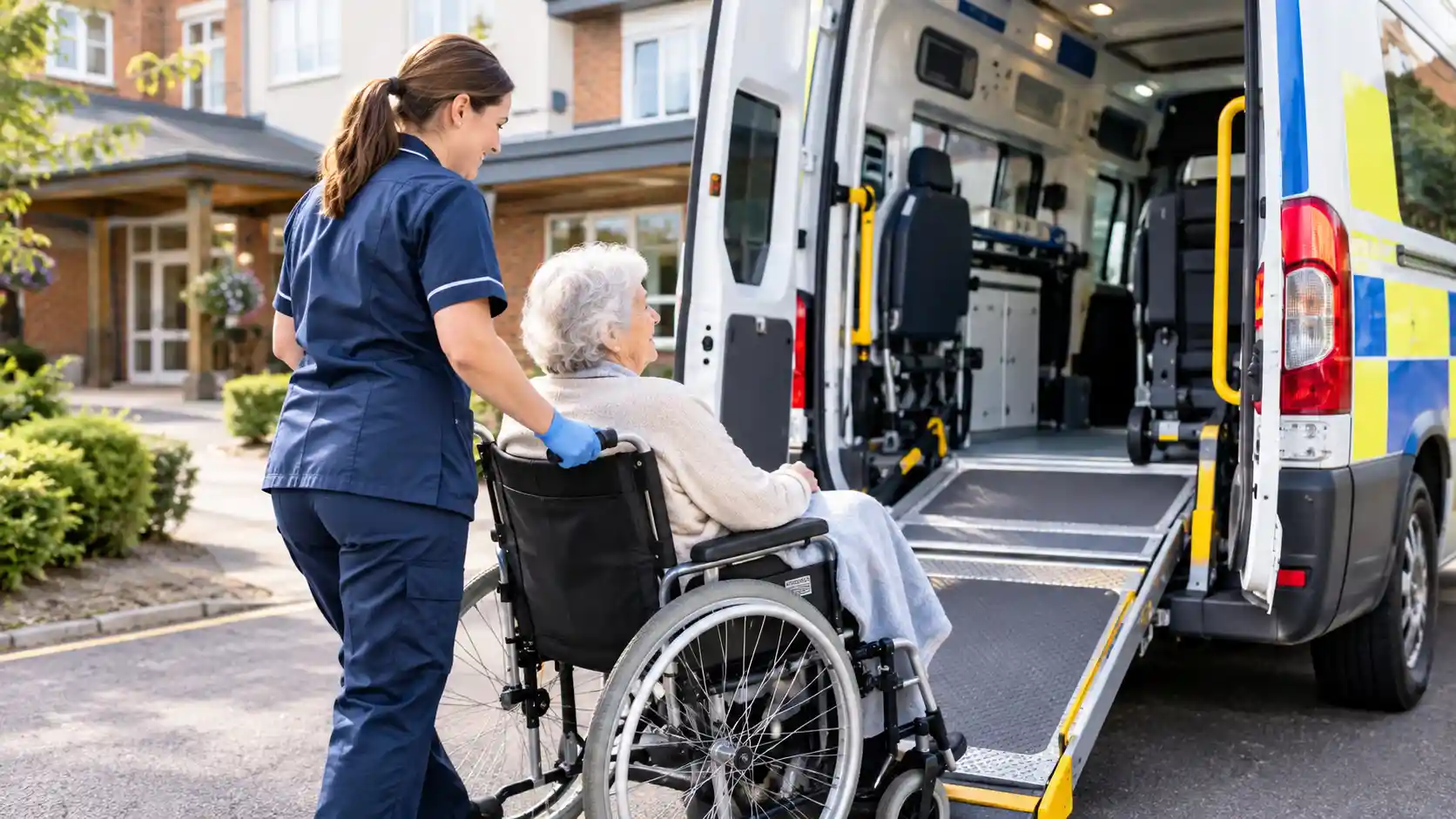
Getting a care home resident to a hospital appointment should not be complicated. But for many care home managers, arranging reliable medical transport is one of the most frustrating parts of the job. NHS patient transport has long waiting times, limited availability for specialist vehicles, and shared journeys that leave elderly residents sitting in vehicles for hours.
If you manage a care home and find yourself spending more time chasing transport than managing care, this guide will help. We explain the options available, how to book the right type of transport, and how to make the process as smooth as possible for your residents.
Understanding Your Residents’ Transport Needs
Not every resident needs the same type of transport, and getting the right vehicle matters more than most people realise.
Some residents are mobile and can walk with assistance. They may be able to travel in a standard car-type vehicle with a care assistant, provided someone helps them in and out and accompanies them during the journey.
Other residents use wheelchairs and need a vehicle with a ramp or tail lift. Wheelchair-accessible transport allows the resident to travel in their own chair without the discomfort and risk of transferring to a vehicle seat.
Some residents cannot sit upright and need stretcher transport. This is common for residents with advanced frailty, post-surgical patients, or those with conditions that require them to lie flat during travel.
A smaller number of residents may need bariatric transport with wider stretchers and reinforced equipment. Standard vehicles cannot safely accommodate patients above certain weight limits, and using the wrong vehicle puts both the resident and the crew at risk.
Before booking any transport, assess the resident’s mobility, weight, clinical needs, and whether they require medical monitoring during the journey. This ensures the right vehicle is sent first time, avoiding delays and rebookings.
NHS Patient Transport for Care Home Residents
NHS patient transport is available for care home residents who meet the eligibility criteria. The assessment is usually carried out by the resident’s GP or the hospital team and is based on medical need. Residents who cannot travel by other means due to their medical condition should qualify.
The NHS service is free, which is its main advantage. However, care home managers across the UK will be familiar with the limitations. Shared vehicles mean residents are picked up and dropped off alongside other patients, adding significant time to what should be a straightforward journey. Waiting times can be unpredictable, with residents sometimes waiting hours after their appointment for the return journey. Availability for wheelchair and stretcher vehicles is often limited, particularly at short notice. And scheduling flexibility is restricted, making it difficult to coordinate with appointment times that change at short notice.
The Care Quality Commission’s guidance on safe transport for care home residents emphasises that providers should ensure residents are transported safely, comfortably, and with dignity. Long waits and shared journeys do not always meet that standard.
Private Patient Transport as an Alternative
Private patient transport offers a different experience. The vehicle is dedicated to your resident with no shared journeys and no multiple stops. Collection times are agreed in advance and the vehicle arrives on schedule.
For care homes, the key advantages are reliability and consistency. You know exactly when the vehicle will arrive and when the resident will be back. There is no chasing, no uncertainty, and no resident sitting in a hospital corridor for three hours waiting for a ride home.
K4 Medical provides patient transport for care homes across London and South East England. Our ambulance care assistants are experienced in working with elderly residents, including those with dementia, reduced mobility, and complex medical needs. We provide wheelchair-accessible vehicles, stretcher transport, and standard vehicles matched to each resident’s requirements.
For residents who need a higher level of clinical monitoring during their journey, our private ambulance services provide paramedic-level care throughout the transport.
How to Book Patient Transport for Your Care Home
Whether you choose NHS or private transport, having a clear booking process makes everything easier.
For NHS transport, contact the Patient Transport Service for your local NHS trust. You will need the resident’s name, NHS number, the appointment details including hospital, department, date, and time, the resident’s mobility status and any special requirements, and confirmation that the resident meets the eligibility criteria. The NHS recommends booking at least 48 hours in advance, though some trusts require longer notice. The NHS website provides further guidance on eligibility and booking.
For private transport with K4 Medical, the process is simpler. Call us on 020 3143 3998 with the resident’s details, pickup address, destination, preferred time, and any mobility or clinical needs. We confirm the vehicle, crew, and cost, and the transport is arranged. No eligibility criteria, no lengthy booking forms, no waiting for approval.
For care homes that need regular transport for multiple residents, we offer contracted arrangements that simplify the process further. One phone number, one provider, consistent crew who get to know your residents, and a single monthly invoice.
Reducing Costs for Regular Transport
If your care home arranges patient transport regularly, costs can add up. There are a few ways to manage this.
Ask about regular booking packages. K4 Medical offers discounted rates for care homes that book ongoing transport for residents attending regular appointments such as dialysis, chemotherapy, or specialist consultations. The per-journey cost on a package is significantly lower than individual bookings.
Combine journeys where appropriate. If two residents have appointments at the same hospital on the same day, some providers can arrange a shared journey at a reduced rate. Unlike NHS shared transport where the pairing is random, this is coordinated between residents from your home travelling to the same destination.
Check whether residents have any funding or benefits that cover transport costs. Some residents may have continuing healthcare funding, personal health budgets, or charitable support that can contribute toward transport costs. Your local authority adult social care team can advise on what is available in your area.
Making the Journey Better for Residents
Transport is not just about getting from one place to another. For elderly care home residents, particularly those with dementia or anxiety, the journey itself can be distressing if it is not handled well.
Brief the transport crew in advance about any specific needs. If a resident becomes anxious in vehicles, if they need reassurance during the journey, if they have communication difficulties, or if there are things that help them feel calm, share this information with the crew before the journey. In our experience, the small details make the biggest difference.
Ensure the resident has everything they need for the appointment. Medication, hospital letters, reading glasses, hearing aids, a familiar blanket or comfort item. These are easy to forget in the rush of getting ready, but they make the resident’s experience significantly better.
Send a familiar member of staff if possible. Having someone the resident knows and trusts alongside them during the journey and at the hospital provides reassurance that no amount of professional care can fully replace.
If your care home needs reliable patient transport for residents attending hospital appointments across London and South East England, contact K4 Medical. Call 020 3143 3998 or request a quote to discuss a transport arrangement for your home.