Falls are one of the most common incidents in care homes across the UK. When a resident falls and cannot get back up, the default response for many care homes is to call 999. It is understandable. Staff want to do the right thing, and calling an ambulance feels like the safest option.
But here is the problem. The vast majority of falls in care homes are non-injury falls. The resident has not broken anything. They have not hit their head. They are conscious, alert, and often just need help getting off the floor safely. Sending a 999 ambulance for these situations ties up emergency resources that are desperately needed elsewhere, and the resident may end up waiting hours on the floor because the call is triaged as a lower priority.
There is a better way, and more care homes across London and the South East are starting to use it.
The Scale of the Problem
Falls account for a significant proportion of 999 calls from care homes in the UK. Research suggests that around 30 to 50 percent of care home residents experience at least one fall each year, and many fall multiple times. For a care home with 40 residents, that could mean dozens of falls over the course of a year.
Not every fall results in an injury. In fact, the majority do not. But without trained staff and proper lifting equipment on-site, care home teams often feel they have no choice but to call 999, even when the resident is clearly uninjured. They cannot safely lift the resident themselves, and they know that attempting an untrained lift could cause more harm than the fall itself.
The result is that ambulances are dispatched to care homes for situations that do not require emergency medical intervention. The resident waits on the floor, sometimes for hours, while the ambulance service prioritises life-threatening calls. Meanwhile, the ambulance crew that eventually arrives spends time on a job that could have been handled faster and more appropriately by a dedicated falls response team.
What Is a Non-Injury Falls Response Service?
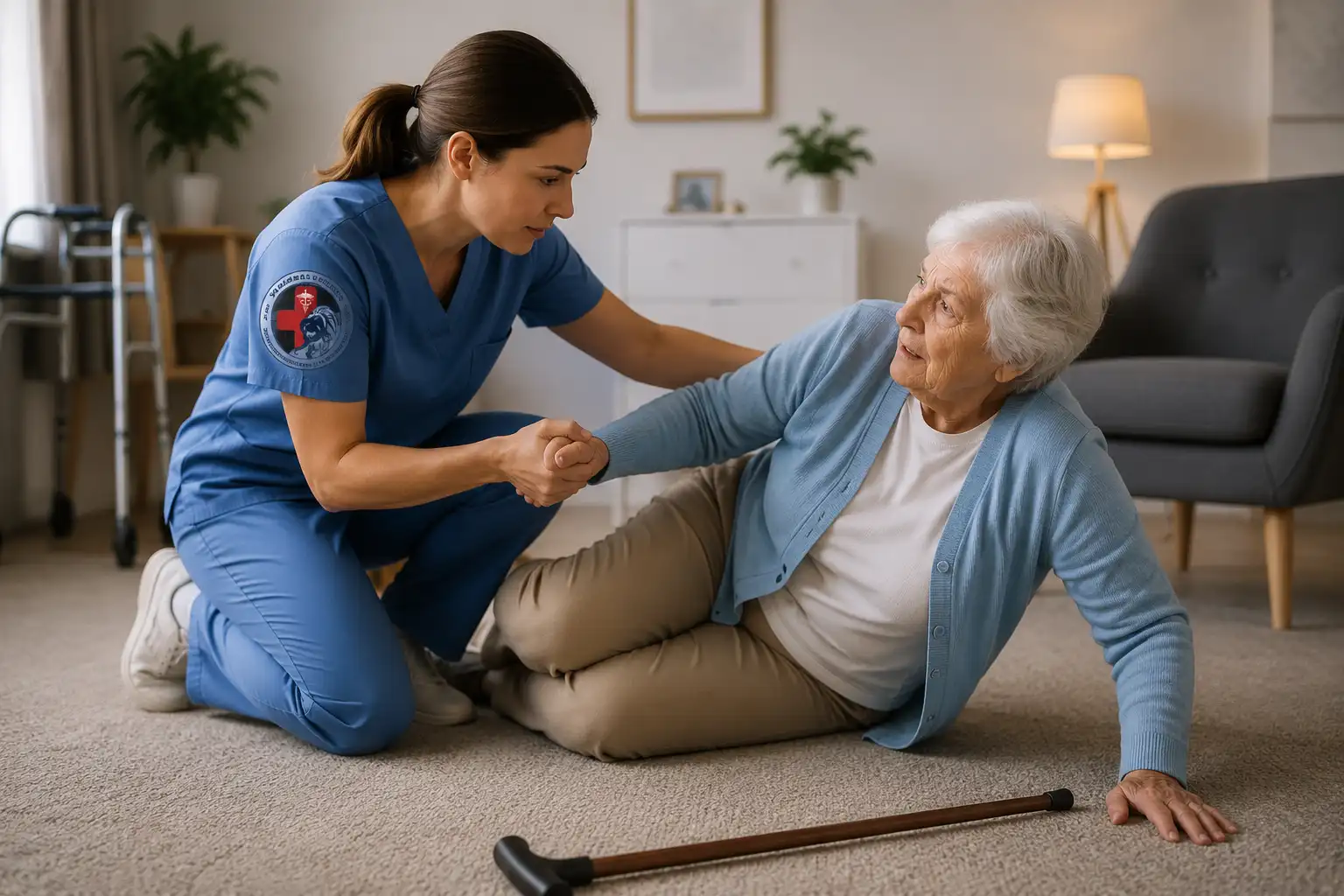
A non-injury falls service is a dedicated response team that attends when a person has fallen but is not seriously injured. The team arrives with specialist lifting equipment, carries out a clinical assessment to check for hidden injuries, lifts the person safely and with dignity, and ensures they are comfortable and well before leaving.
This is exactly what care homes need for the majority of their falls. A fast, professional response that gets the resident off the floor quickly without tying up a 999 ambulance.
K4 Medical provides a dedicated non-injury falls response across London and South East England, working with care homes on both ad-hoc and contracted arrangements. Our teams are trained in safe manual handling, clinical observation, and falls assessment, and they carry the right equipment to lift residents safely regardless of their size or mobility.
How It Reduces 999 Calls
The impact on 999 call volumes is straightforward. When a care home has a falls response service in place, staff have an alternative to calling 999 for non-injury falls. Instead of dialling 999 and waiting, they call the falls response team directly. The team attends, assesses the resident, and manages the situation on-site.
In our experience, care homes that implement a dedicated falls response see a significant reduction in 999 calls within the first few months. Some homes report reducing their falls-related ambulance calls by 40 to 60 percent. That is a meaningful difference for the home, for the residents, and for the local ambulance service.
It is worth being clear that a falls response service does not replace 999 for genuine emergencies. If a resident falls and shows signs of a fracture, a head injury, a stroke, or any life-threatening condition, the care home should always call 999. The falls response service handles everything else, which in most care homes is the majority of falls.
Benefits Beyond Reducing 999 Calls
Reducing ambulance calls is the headline benefit, but there are others that matter just as much to care home managers and their residents.
Residents spend less time on the floor. A dedicated falls team typically responds much faster than a 999 ambulance for a non-emergency call. Less time on the floor means less risk of pressure injuries, hypothermia, dehydration, and the psychological distress that comes from lying helpless and waiting.
Staff feel supported. Care home staff often find non-injury falls stressful because they know they should not attempt to lift the resident themselves, but they also feel helpless watching them wait on the floor. Having a professional team to call gives staff confidence and reduces their anxiety around falls incidents.
Better incident records. A professional falls response team provides clinical documentation for every attendance, including observations, assessment findings, and any recommendations. This supports the care home’s incident reporting, CQC compliance, and duty of care obligations.
Families have more confidence. When a resident’s family knows that falls are handled quickly and professionally rather than resulting in a four-hour wait for an ambulance, their confidence in the care home increases. It is a genuine differentiator in a competitive market.
How to Set Up a Falls Response Partnership
Setting up a falls response arrangement with K4 Medical is simple.
Contact us to discuss your care home’s size, resident profile, and typical falls frequency. We will recommend an arrangement that fits your needs, whether that is a pay-per-call service or a contracted monthly package with priority response. We provide your staff with a direct contact number so they can reach our falls team immediately when a fall occurs. And we handle the rest, responding quickly, assessing the resident, lifting them safely, and providing full clinical documentation.
For care homes that also need regular patient transport for residents attending hospital appointments, we can combine both services into a single partnership arrangement, giving you one reliable provider for both needs.
If a fall results in an injury that requires hospital treatment, our private ambulance service can provide rapid transport to the nearest A&E with qualified medical staff on board.