Yes, they are. Private ambulances in the UK are regulated to the same safety standards as NHS ambulance services. But the short answer only tells part of the story. Understanding what makes a private ambulance safe, how the system works, and what to check before you book one is important, especially if you are trusting them with the health of someone you care about.
In this guide, we explain how private ambulances are regulated, what standards they must meet, and how you can verify that a provider is genuinely safe before you use them.
How Private Ambulances Are Regulated
Since April 2011, every private ambulance provider in England that offers medical treatment or transport must be registered with the Care Quality Commission. The CQC is the same independent body that regulates NHS hospitals, GP surgeries, care homes, and NHS ambulance services.
This is not optional. Operating without CQC registration is illegal, and the CQC has the power to shut down providers that fail to meet standards. Registration means the provider has been assessed and meets the legal requirements for patient safety, clinical governance, staff qualifications, vehicle standards, and infection control.
In practice, this means a CQC-regulated private ambulance provider operates under the same regulatory framework as the NHS ambulance trust in your area. The standards are identical. The oversight is the same. The expectations for patient care are no different.
K4 Medical delivers all its private ambulance services through CQC-regulated providers, ensuring every journey meets these nationally recognised standards.
Staff Qualifications and Training
One of the most common concerns people have about private ambulances is whether the staff are properly qualified. It is a fair question, and the answer is reassuring.
Private ambulance crews in the UK include the same types of clinical professionals you would find on an NHS ambulance. Emergency care assistants provide basic clinical support and patient handling. Emergency medical technicians deliver a broader range of clinical care including trauma management and patient assessment. HCPC-registered paramedics provide advanced clinical interventions including medication administration, advanced airway management, and independent clinical decision-making.
All clinical staff in CQC-regulated private ambulance services must hold current, verified qualifications. Paramedics must be registered with the Health and Care Professions Council, the same register that NHS paramedics appear on. There is no separate, lower standard for private sector staff. A paramedic is a paramedic, whether they work for the NHS or a private provider.
In our experience, many private ambulance crew members have previously worked for NHS ambulance trusts and bring years of frontline experience with them. Some work across both sectors simultaneously. The clinical skills are the same.
Vehicle Standards and Equipment
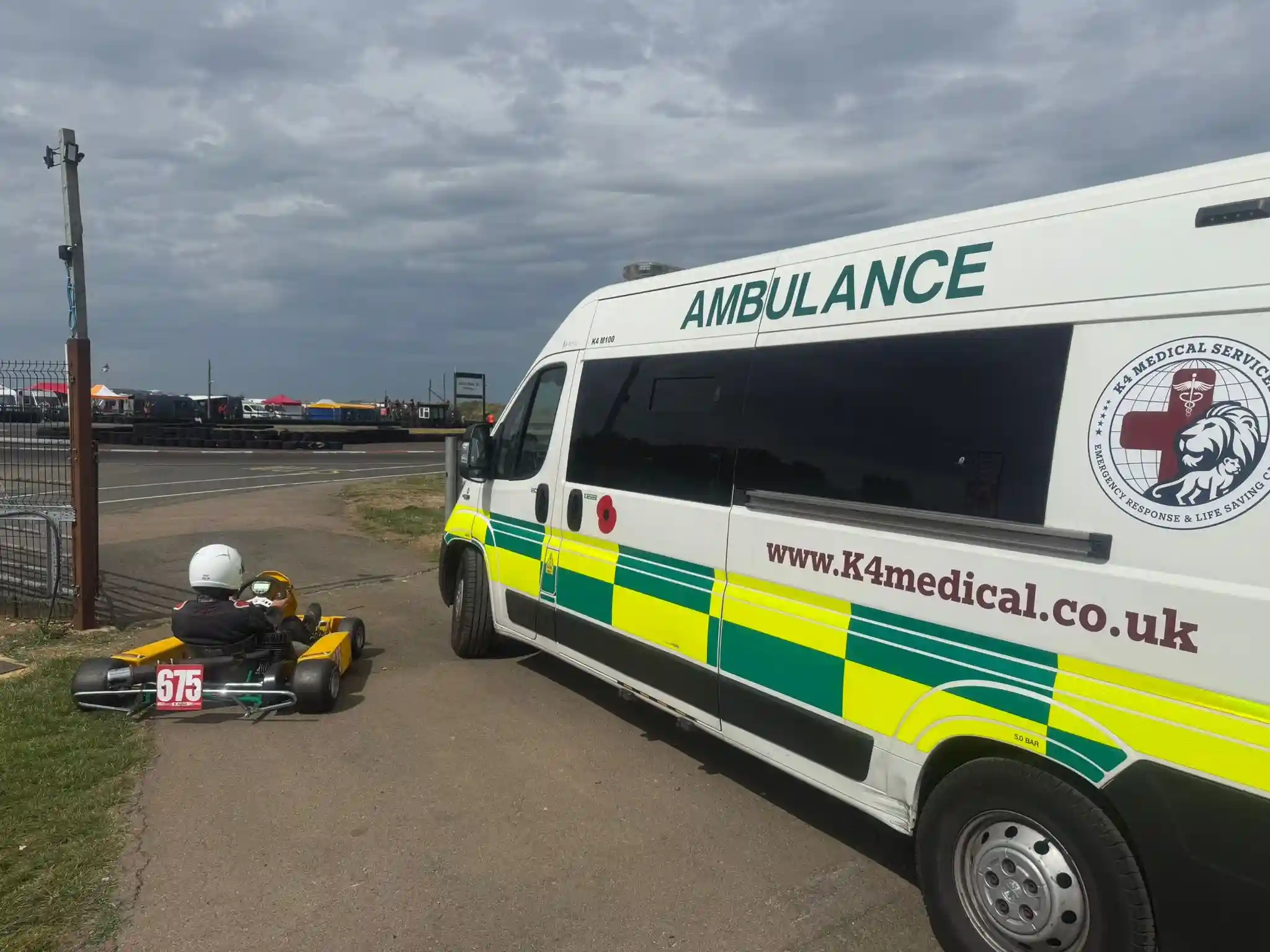
Private ambulances in the UK must meet the same vehicle and equipment standards as NHS ambulances. This is not a grey area. CQC regulation requires that vehicles are properly maintained, serviced, and inspected on a regular schedule. Essential medical equipment is carried on every vehicle, including cardiac monitors, defibrillators, oxygen delivery systems, and trauma kits. Infection control procedures are followed, with vehicles cleaned and decontaminated between patients. Equipment is calibrated, tested, and replaced according to manufacturer guidelines. And vehicle specifications meet the requirements for the type of transport being provided, whether that is a standard patient transport vehicle, a wheelchair-accessible vehicle, or a fully equipped emergency ambulance.
K4 Medical operates a fleet of fully equipped vehicles across London and South East England, covering everything from standard patient transport to emergency ambulance standby for events and productions.
How to Check a Provider Is Safe
Not every company advertising private ambulance services in the UK is CQC-regulated. Some operate without registration, particularly in areas like event first aid where the regulatory boundaries can be less clear. Here is how to check that a provider is genuine.
Ask them directly. A legitimate provider will immediately confirm their CQC status and give you their registration details. If they hesitate, avoid the question, or say registration is not required for their type of service, treat that as a serious red flag.
Check the CQC website. You can search for any registered provider at cqc.org.uk. The listing will show the provider’s registration status, their registered address, and their most recent inspection rating. It takes less than a minute and gives you complete peace of mind.
Look for staff credentials. Ask what qualifications the crew hold, whether paramedics are HCPC-registered, and whether all staff have current DBS clearance. A safe provider will be happy to share this information.
Check insurance. The provider should hold professional indemnity insurance and public liability insurance at appropriate levels. Again, a reputable provider will confirm this without hesitation.
Read reviews and ask for references. What do other clients say about the service? Can the provider share testimonials or references from previous clients? For event medical services, ask which events they have covered and whether they can provide contact details for organisers who can vouch for them.
What Makes Private Ambulances Different from NHS
Private ambulances are not a lower standard alternative to the NHS. They serve a different purpose. NHS ambulances respond to 999 emergency calls and are publicly funded. Private ambulances are booked directly for planned transfers, event cover, care home transport, and specialist medical journeys.
The safety standards are the same. The regulation is the same. The staff qualifications are the same. The difference is in how you access the service and what you use it for.
In fact, every NHS ambulance trust in England contracts private ambulance providers to help manage demand during busy periods. Private ambulances regularly respond to 999 calls under NHS contract, using the same clinical protocols and dispatch procedures as NHS crews. If private ambulances were not safe, the NHS would not use them.
Still Have Questions?
If you are considering using a private ambulance for a hospital transfer, event, or any other medical transport need, and you want to be sure you are choosing a safe, regulated provider, K4 Medical is here to help.
We deliver all our ambulance and medical services through CQC-regulated providers. Our crews are qualified, DBS-checked, and experienced. Our vehicles are fully equipped and regularly inspected. And we are always happy to answer questions about our registration, qualifications, and safety standards.