If you employ people in the UK, you have a legal duty to provide first aid. That much is straightforward. What is less straightforward is working out exactly what your workplace needs, because the law does not give you a simple checklist. It gives you a set of principles and expects you to figure out the rest through a risk assessment.
Most employers get the basics right. There is usually a first aid kit somewhere in the building and someone who vaguely knows where it is. But the gap between that and actually meeting your legal obligations can be wider than you think. Here is what the law requires, what good practice looks like, and what to do if your current arrangements are not quite there.
What the Law Actually Requires
The Health and Safety (First-Aid) Regulations 1981 are the foundation. They require every employer to provide adequate and appropriate first aid equipment, facilities, and personnel for their employees. The key word is adequate. What counts as adequate for a small office with five people is very different from what a construction site or a warehouse needs.
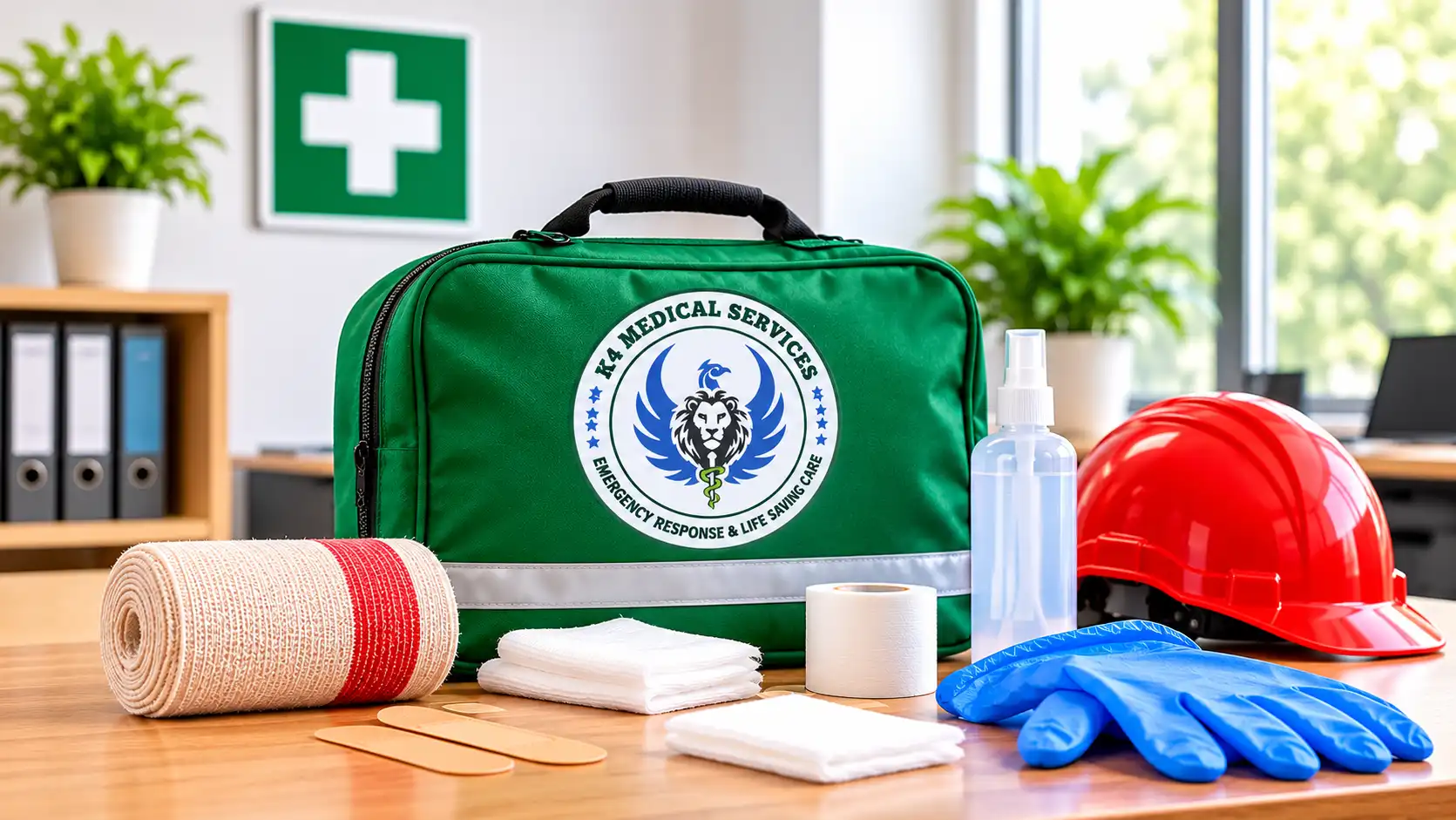
Under the regulations, every workplace must have at least a suitably stocked first aid kit, an appointed person to take charge of first aid arrangements, and information for all employees about where the first aid kit is and who the appointed person is.
An appointed person is not the same as a qualified first aider. Their role is to manage the first aid arrangements, call the emergency services when needed, and look after the equipment. They do not need a first aid qualification, although many employers choose to train them anyway.
For workplaces where the risk assessment identifies a need for more than just an appointed person, you will need one or more designated first aiders who hold a current qualification.
Running a First Aid Needs Assessment
This is where most employers either get it right or get it wrong. A first aid needs assessment is not optional. It is a legal requirement, and it determines everything else about your first aid provision.
Your assessment should consider the nature of your work and the specific hazards involved. An office has different risks from a factory floor. The number of employees on site at any given time matters because more people generally means more first aiders. The layout of your premises is relevant, particularly if you have multiple floors, buildings, or remote areas where it takes time to reach someone. Whether members of the public visit your premises regularly should be factored in. Your accident and incident history tells you what has actually happened before and what is likely to happen again. And whether lone workers or shift workers are part of your operation affects how you provide cover outside normal hours.
The assessment should be reviewed regularly, not just written once and filed away. Any significant change in your workplace, such as new equipment, a building move, or a change in the type of work you do, should trigger a review.
How Many First Aiders Do You Need?
The HSE does not prescribe exact numbers, but their guidance provides a framework based on risk level and employee count.
For lower-risk workplaces such as offices, shops, and libraries, the general recommendation is at least one appointed person and a first aid kit for workplaces with fewer than 25 employees. For 25 to 50 employees, at least one qualified first aider holding an Emergency First Aid at Work (EFAW) certificate. And for more than 50 employees, at least one first aider holding a full First Aid at Work (FAW) certificate plus additional first aiders depending on the specific risks.
For higher-risk workplaces including construction sites, warehouses, manufacturing, and food processing, the numbers increase. Even with fewer than five employees, a qualified first aider is recommended. For larger higher-risk workplaces, you may need multiple FAW-qualified first aiders spread across different areas and shifts.
One thing we regularly see is employers who had the right number of first aiders when they did their initial assessment but have not adjusted as the business has grown. Twenty people became fifty, the single first aider went on maternity leave, and suddenly there is nobody qualified on-site. Keeping your assessment current is not bureaucracy. It is how you avoid being caught out.
First Aid Qualifications and Certificates
First aid certificates in the UK are valid for three years. After that, the first aider must complete a requalification course to maintain their certificate. Letting certificates lapse is one of the most common compliance failures we come across, often because nobody is tracking the expiry dates.
The two main qualifications are EFAW, which is a one-day course covering basic life-saving skills and is suitable for lower-risk environments, and FAW, which is a three-day course covering a broader range of emergencies and is required for higher-risk workplaces.
For workplaces with specific risks, additional training may be appropriate. This includes anaphylaxis management for food businesses, oxygen administration for certain industrial settings, and mental health first aid, which is increasingly recognised as an important part of workplace wellbeing.
The HSE recommends annual refresher training between certificate renewals. While not mandatory, it helps keep skills sharp, particularly for first aiders who rarely have to use their training in practice.
When Your Workplace Needs More Than Internal First Aiders
There are situations where relying solely on trained members of your own staff is not enough.
If your business runs events, open days, or activities that bring members of the public onto your premises, your internal first aiders may not be sufficient. The event medical cover requirements for public-facing activities are different from standard workplace first aid, and you may need professional medical staff on-site.
If your workplace includes a school, nursery, or educational setting, the requirements around paediatric first aid and welfare provision go beyond standard workplace regulations. Many schools find that having a dedicated first aid and welfare service provides better coverage than relying on teaching staff who have other responsibilities.
If your workplace is a care home, nursing home, or supported living facility, your residents have clinical needs that standard workplace first aiders are not equipped to manage. Professional medical cover, including non-injury falls response for care home residents, provides a level of care that goes beyond basic first aid.
If your workplace is an industrial site, warehouse, or construction project with higher medical risks, having a paramedic on-site during high-risk activities provides advanced clinical capability that an EFAW-trained office worker simply cannot match.
What Happens If You Are Not Compliant
The consequences of failing to meet your first aid obligations can be significant. The HSE can issue improvement notices requiring you to fix gaps within a set timeframe. In more serious cases, they can issue prohibition notices that stop work until the problem is resolved. Prosecution is possible for persistent or serious failures, with unlimited fines for organisations.
Beyond the regulatory risk, there is the practical reality. If an employee is injured at work and your first aid provision is inadequate, you face civil liability claims, insurance complications, and reputational damage. And if something happens and you cannot demonstrate that you carried out a proper needs assessment, your position becomes very difficult to defend.
The good news is that getting compliant is not complicated or expensive. It starts with an honest needs assessment, the right number of trained first aiders, properly maintained equipment, and a clear plan for covering absences and changes in your workforce.
If your workplace needs professional first aid support, whether that is cover for events, schools, care homes, or higher-risk environments, K4 Phoenix EMS provides qualified, DBS-checked first aiders and medical professionals across London and South East England.