Nobody wants to think about it. You have spent months planning your event, everything is running smoothly, and then someone collapses. They are not breathing. Their heart has stopped. And suddenly, every second counts.
Cardiac arrest kills more than 30,000 people outside of hospitals in the UK every year. It does not care whether the person is young or old, fit or unwell. It happens at football matches, music festivals, corporate dinners, school sports days, and village fetes. And when it happens at your event, you are the person responsible for what comes next.
This is not written to scare you. It is written to make sure you are prepared.
What Cardiac Arrest Actually Means
Cardiac arrest is not the same as a heart attack, although the two are often confused. A heart attack is a circulation problem where blood flow to the heart is blocked. The person is usually conscious, in pain, and needs urgent hospital treatment. A cardiac arrest is an electrical problem where the heart stops pumping blood entirely. The person loses consciousness, stops breathing, and will die within minutes without intervention.
The distinction matters because the response is completely different. A heart attack needs an ambulance and hospital care. A cardiac arrest needs CPR and a defibrillator right now, in the first three to five minutes, before the ambulance even arrives.
This is why having the right medical cover at your event is not about ticking a box. It is about whether someone lives or dies.
The First Three Minutes
When someone goes into cardiac arrest, the clock starts immediately. For every minute that passes without CPR and defibrillation, their chance of survival drops by roughly 10 percent. After 10 minutes without intervention, survival rates are extremely low.
In a best-case scenario, a 999 ambulance arrives within 7 to 8 minutes. In many parts of the UK, it takes longer. At an outdoor event, in a field, with limited vehicle access and thousands of people between the ambulance and the patient, it could be 15 minutes or more.
That gap between the cardiac arrest and the arrival of the ambulance is where people die. And that gap is exactly what on-site medical cover fills.
A trained medic with a defibrillator who is already on-site can reach the patient within 60 seconds. They start CPR immediately, apply the defibrillator, and give the patient the best possible chance of survival before the ambulance arrives. In our experience, the difference between a good outcome and a devastating one almost always comes down to those first few minutes.
What Should Happen at Your Event
If your event has proper event medical services in place, here is what the response looks like when someone goes into cardiac arrest.
Your on-site medical team is alerted immediately, either by radio, by a member of the public, or by your event stewards. Because they are already at the venue, they reach the patient within seconds rather than minutes. The medic assesses the patient, confirms cardiac arrest, and begins CPR. A defibrillator is applied. The device analyses the heart rhythm and delivers a shock if needed. This can restart the heart.
Simultaneously, 999 is called. The on-site team continues CPR and advanced life support until the ambulance arrives. When the ambulance crew gets there, your medic provides a clinical handover with all the information they need, including when the arrest happened, how many shocks were delivered, what drugs were given, and what the patient’s response has been.
If your event has ambulance standby on-site, the patient can be stabilised and transported to hospital immediately without waiting for a 999 ambulance to navigate through your event site.
That is the difference between having professional medical cover and not having it.
What Happens If You Have No Medical Cover
If your event has no medical cover, the response looks very different.
Someone notices the person has collapsed. There is confusion about what to do. Eventually someone calls 999. A bystander might attempt CPR, but many people have never been trained and are afraid of doing it wrong. Nobody has a defibrillator. Minutes pass. The ambulance is dispatched but takes time to arrive, especially at a busy event with limited access.
By the time professional help arrives, the window for effective intervention may have closed.
Beyond the immediate human tragedy, there are serious consequences for you as the event organiser. If your risk assessment identified the possibility of a medical emergency and you failed to provide appropriate medical cover, you face potential prosecution under the Health and Safety at Work Act, civil liability claims from the family, insurance complications or denied claims, and reputational damage that could end your ability to organise future events.
None of this is theoretical. It happens in the UK every year at events where organisers decided that medical cover was an unnecessary expense.
What You Actually Need
The good news is that protecting your event against cardiac arrest does not require a hospital on-site. It requires three things.
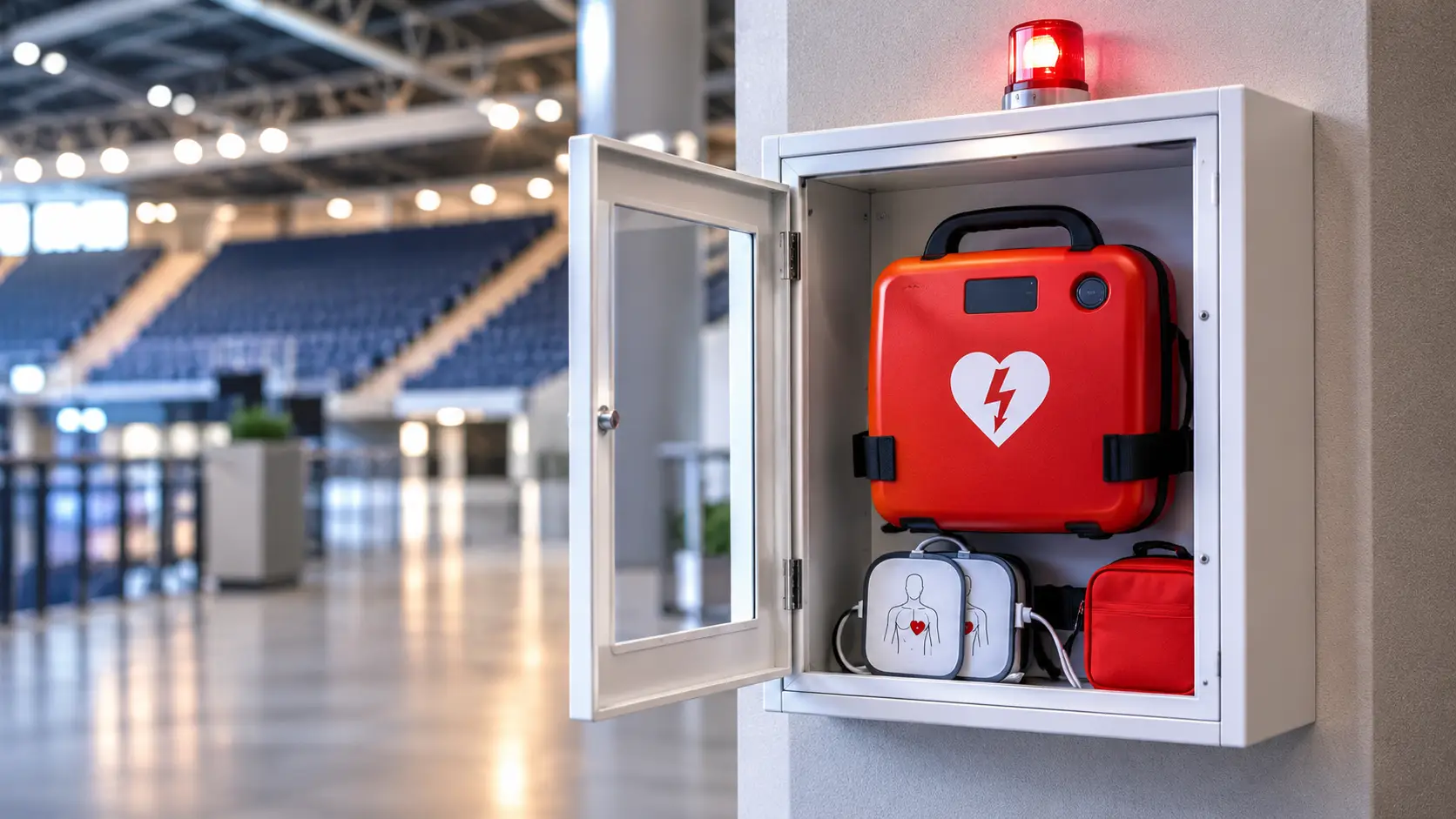
A defibrillator. An automated external defibrillator is designed to be used by anyone, with or without training. It talks you through the process step by step. Having one on-site, in a known and accessible location, is the single most important piece of medical equipment at any event.
Trained medical staff. A qualified medic or paramedic who is trained in advanced life support can manage a cardiac arrest far more effectively than an untrained bystander. They know how to deliver effective CPR, use the defibrillator correctly, manage the airway, and coordinate with the incoming ambulance crew.
A medical plan. Knowing where the defibrillator is, who is responsible for the medical response, how to contact the medical team, and how to guide the ambulance to the right location on your site. This planning takes an hour and could save a life.
For smaller events, a qualified first aider with a defibrillator provides a basic level of cover. For larger events, a paramedic team with ambulance capability ensures the highest level of response.
It Does Not Have to Be Expensive
One of the most common reasons event organisers skip medical cover is cost. And it is true that hiring a full paramedic team for a small event might not make financial sense. But having a single qualified medic with a defibrillator is affordable for almost any event budget.
When you weigh the cost against the alternative, which is a person dying at your event because nobody could help them in those first three minutes, the decision makes itself.
K4 Phoenix EMS provides event medical cover for events of all sizes across London and the UK. Whether you need a single medic for a community fair or a full paramedic team for a festival, we match the cover to your event and your budget.