Walk into any busy primary school at lunchtime and you will see exactly why welfare officers exist. A child with a nosebleed in the corridor, another one in tears because they fell in the playground, a Year 4 pupil who needs their inhaler, and a parent at reception asking whether their child has taken their lunchtime medication. All at the same time.
Teachers cannot manage all of this and teach a class. Office staff cannot manage it and run the school administration. Someone needs to be responsible for the day-to-day health and wellbeing of the children, and that someone is the welfare officer.
What Does a School Welfare Officer Do?
A welfare officer, sometimes called a school welfare assistant, medical room officer, or pastoral care assistant, is the person responsible for managing the medical and welfare needs of pupils during the school day. Their role covers a wide range of responsibilities that sit between teaching and medical care.
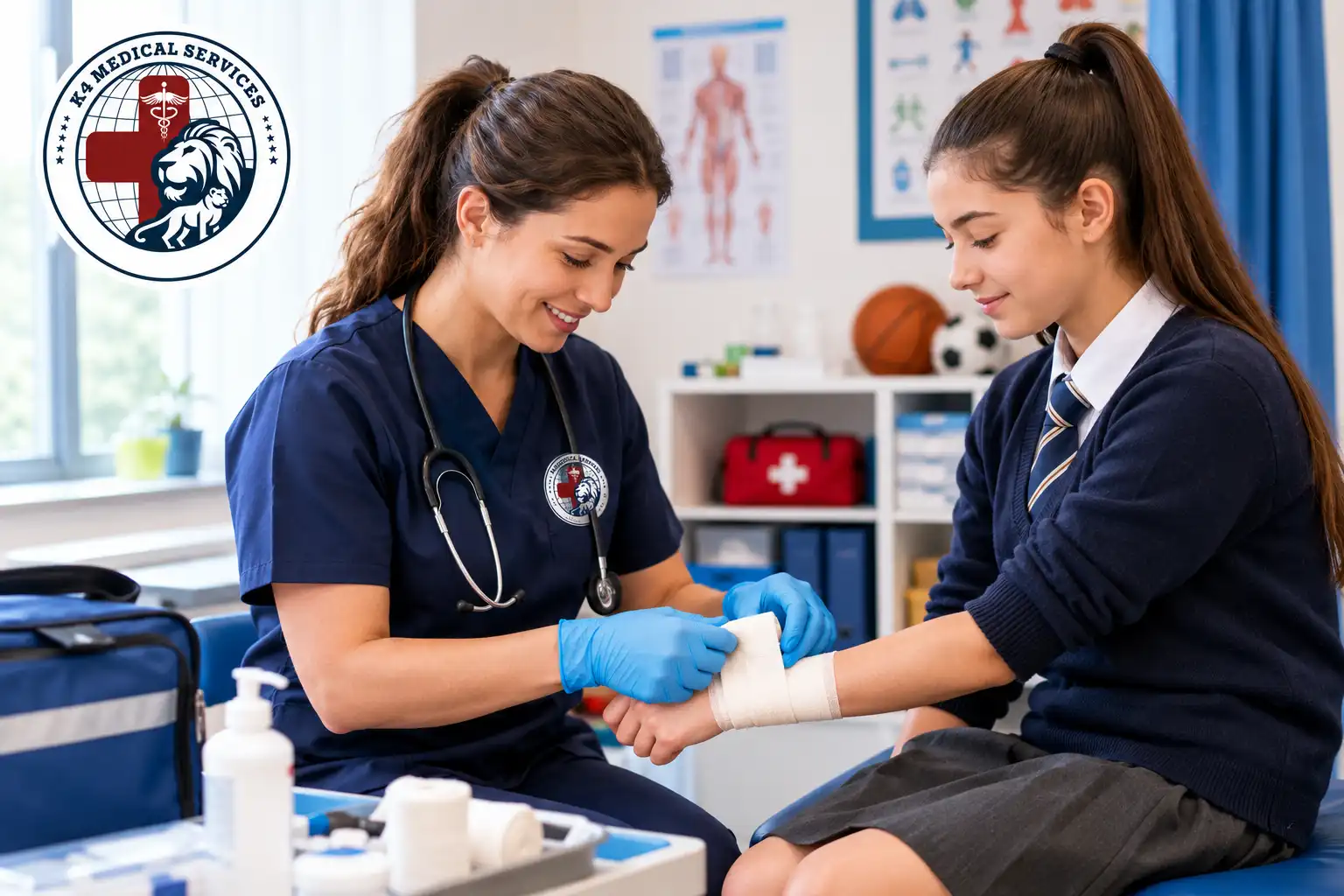
On a typical day, a school welfare officer manages the medical room, treating minor injuries like cuts, bumps, grazes, and nosebleeds. They administer prescribed medication to pupils who need it during school hours, including inhalers, EpiPens, insulin, and antihistamines. They carry out basic health observations when a child feels unwell and decide whether the child can return to class or needs to go home. They contact parents when a child is too unwell to stay in school. They maintain medical records and individual healthcare plans for pupils with ongoing conditions such as asthma, diabetes, epilepsy, and severe allergies. They manage the school’s first aid supplies, checking kits regularly and restocking as needed. And they provide emotional support and a calm space for children who are anxious, upset, or dealing with difficult situations at home.
In our experience, the welfare officer is often the person in the school who knows every child with a medical condition by name, knows where every EpiPen is stored, and knows which child is likely to come through the door at 10am because they always feel unwell after PE. It is a role that runs on knowledge, patience, and genuine care.
Why Schools Need a Dedicated Welfare Officer
Many schools try to manage pupil welfare by spreading the responsibility across teaching assistants, office staff, and whoever happens to be free. This works until it does not. And when it stops working, it usually stops working at the worst possible moment.
The reality is that pupil medical needs have become more complex. The number of children with diagnosed allergies, asthma, diabetes, and mental health needs has increased significantly over the past decade. Schools are managing more medications, more healthcare plans, and more safeguarding concerns than ever before. Trying to handle all of this as an add-on to someone else’s job is not sustainable.
From a compliance perspective, schools have clear obligations. The Children and Families Act 2014 places a duty on schools to support pupils with medical conditions. DfE guidance Supporting Pupils at School with Medical Conditions makes clear that schools should have a named person responsible for implementing medical policies and ensuring individual healthcare plans are followed. In many schools, that named person is the welfare officer.
OFSTED also takes pupil welfare seriously. Inspectors will look at how the school manages medical needs, safeguarding, and the overall wellbeing of pupils. Having a dedicated welfare officer demonstrates a structured, professional approach to these responsibilities.
What Qualifications Does a Welfare Officer Need?
There is no single mandatory qualification for a school welfare officer in the UK, but most schools expect the following as a minimum.
A current First Aid at Work (FAW) certificate, or ideally a paediatric first aid qualification for anyone working with children under five. An Enhanced DBS check, which is mandatory for anyone working with children. Training in administering medication, including inhalers, EpiPens, and blood glucose monitoring. An understanding of common childhood medical conditions including asthma, anaphylaxis, epilepsy, and type 1 diabetes. Safeguarding training appropriate to their role. And strong communication skills for liaising with parents, teachers, and external health professionals.
Some welfare officers also hold qualifications in emotional literacy, mental health first aid, or counselling skills, which allow them to provide a broader level of pastoral support to pupils.
For schools that do not have a dedicated welfare officer on staff, or where the existing welfare officer is absent, ill, or on leave, K4 Medical provides trained, DBS-checked welfare and first aid support for schools across London and South East England. Our team can step in at short notice to manage the medical room, administer medication, and ensure continuity of care for pupils.
The Difference Between a Welfare Officer and a School Nurse
Parents and staff sometimes confuse the two roles, but they are quite different.
A school nurse is a qualified registered nurse, employed or commissioned by the NHS, who provides clinical health assessments, immunisation programmes, and public health advice across a group of schools. School nurses are not based at a single school full-time. They visit on a rota, and many schools only see their school nurse once a fortnight or less.
A welfare officer is based at the school, present every day, and deals with the immediate, day-to-day medical and welfare needs of pupils. They are the constant presence that children and staff rely on when something happens during the school day.
Both roles are important, but they serve very different purposes. The school nurse provides strategic health support across a cluster of schools. The welfare officer provides daily, hands-on care in one school. Most schools need both, and having a welfare officer does not replace the need for school nurse input, or the other way around.
When to Consider Outsourcing Welfare Support
There are several situations where bringing in external welfare support makes sense for a school.
When your existing welfare officer is off sick or on maternity leave and you need cover at short notice. When your school does not have the budget for a full-time welfare officer but still needs professional medical room management. When you are expanding pupil numbers and your current provision is stretched. When OFSTED has flagged welfare or medical provision as an area for improvement. Or when you want to ensure that first aid cover for school events, trips, and sports days is handled by a dedicated professional rather than a teacher doubling up.
K4 Medical works with schools across London and the South East to provide flexible, DBS-checked welfare and first aid support. Whether you need daily cover, term-time contracts, or ad-hoc support for events and trips, we can match the provision to your school’s needs.
For schools that also need event medical cover for larger events such as sports tournaments, open days, or summer fairs, we can provide combined welfare and event medical support in a single package.
Call 020 3143 3998 or get in touch to discuss welfare support for your school.