First aid in health and social care is the immediate help given to someone who is injured or suddenly unwell in a care environment. This could be a care home, a school, a supported living facility, or a community service setting. The aim is to keep the person safe, prevent their condition from getting worse, and get them the right help as quickly as possible.
For anyone working in health and social care, first aid is a part of your legal duty of care. Whether you are a care worker, a support assistant, or a manager, understanding what it
Why First Aid Matters in Health and Social Care
People receiving care are often more vulnerable to medical emergencies than the general population. Elderly residents in care homes may be at higher risk of falls and cardiac events. Individuals with learning disabilities may have conditions like epilepsy that require specific first aid responses. Children in schools and nurseries are naturally prone to bumps, cuts, and allergic reactions.
In all of these settings, having trained first aiders on-site is necessary. It is a legal requirement under the Health and Safety (First-Aid) Regulations 1981. Employers must provide adequate first aid equipment, facilities, and trained personnel based on a workplace risk assessment.
What K4 Medical has found from working with schools and care facilities across London and South East England is that many organisations meet the minimum legal requirement but stop there. Having one appointed person with a basic certificate is not always enough, particularly in settings where the people in your care have complex medical needs.
Common Emergencies in Health and Social Care Settings
The range of emergencies that can happen in a care environment are wide. Some of the most common situations include falls, which are the leading cause of injury in care homes and among elderly patients. Choking incidents, particularly during mealtimes in care homes and schools, require immediate and confident intervention. Cardiac arrests, where knowing how to perform CPR and use a defibrillator can be the difference between life and death. Seizures, which are common among people with epilepsy, require a calm, trained response. Severe allergic reactions, including anaphylaxis, need fast action with an adrenaline auto-injector. Breathing difficulties, burns, scalds, and sudden loss of consciousness also occur regularly in care settings.
Each of these situations calls for a different response. A generic first aid certificate covers the basics, but staff working in health and social care benefit from training that is tailored to the specific risks in their environment.
First Aid Training Requirements
Under UK law, employers in health and social care must ensure that enough staff members hold a valid first aid qualification. The two main levels of first aid training are Emergency First Aid at Work (EFAW), which is a one-day course covering basic life-saving skills, and First Aid at Work (FAW), which is a three-day course providing a broader range of first aid competencies.
For settings involving children, such as schools, nurseries, and youth services, paediatric first aid training is also required. Ofsted requires at least one staff member with a valid paediatric first aid certificate to be on-site at all times in early years settings.
In our experience, the most effective care settings go beyond the minimum. They invest in regular refresher training, scenario-based exercises, and condition-specific training for things like seizure management, diabetes emergencies, and mental health first aid.
First Aid Equipment and Facilities
Having trained staff is only part of the picture. Health and social care settings also need to ensure they have the right first aid equipment readily available. This includes well-stocked first aid kits in accessible locations throughout the building, a defibrillator (AED) with staff trained to use it, clearly signed first aid rooms or treatment areas, and personal protective equipment for first aiders.
First aid kits should be checked regularly and restocked after every use. It sounds obvious, but in busy care environments this is one of the things that often gets overlooked.
When to Call for Professional Help
First aid is about providing immediate care, but it has its limits. Staff should be confident in recognising when a situation is beyond their training and when to call 999 or arrange professional medical support.
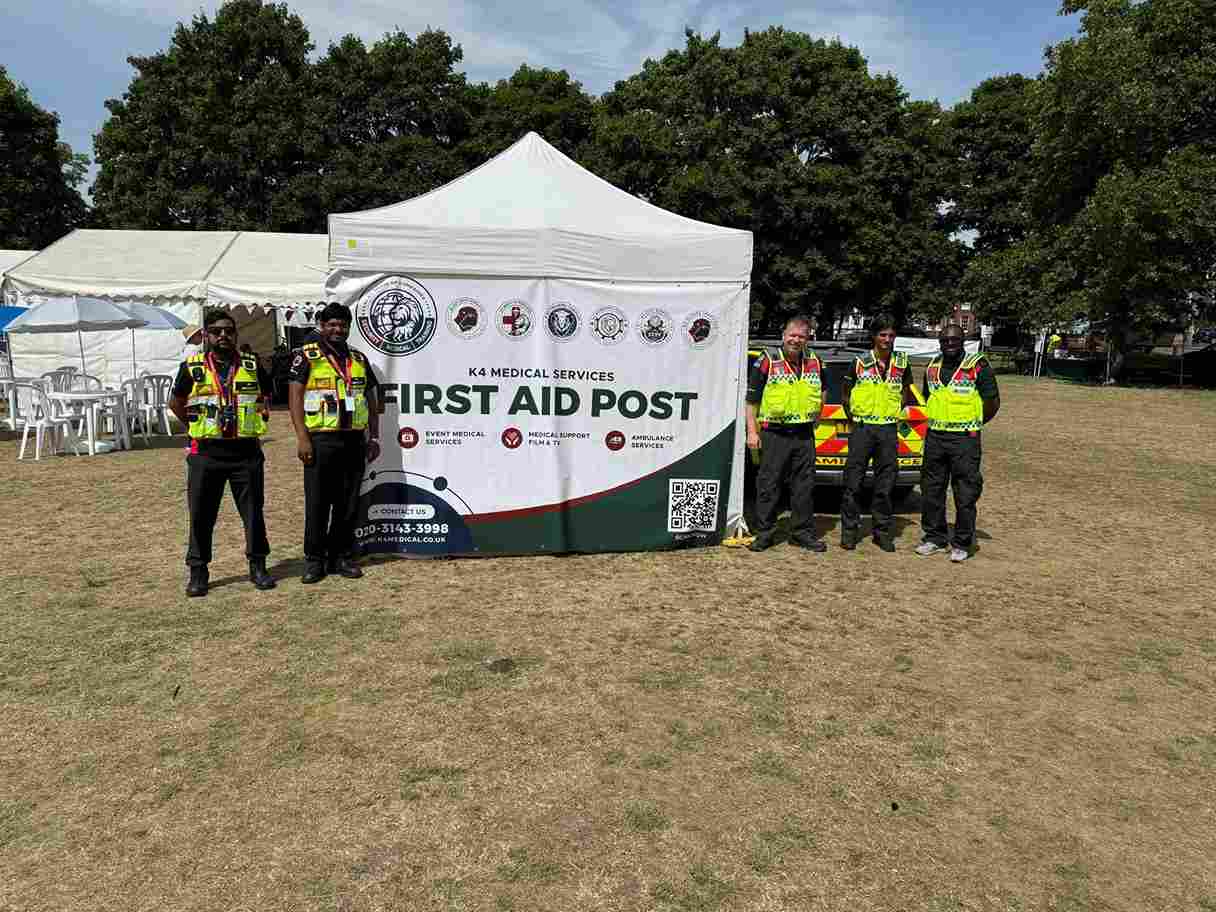
For care homes and health facilities that want an additional layer of safety, professional first aid and welfare services can provide trained first aiders and medical professionals on-site for events, activities, and day-to-day cover. This is particularly valuable for school events, sports days, and outings where the risk profile is higher than normal.
For situations requiring patient transport to hospital, non-emergency patient transport services can provide safe, comfortable medical transport for individuals who cannot travel independently.
Frequently Asked Questions
What is first aid in health and social care?
First aid in health and social care is the immediate assistance given to a person who is injured or suddenly unwell in a care setting such as a care home, school, or supported living facility. It includes assessing the situation, providing basic treatment, preventing further harm, and calling for emergency help when needed.
Is first aid training mandatory in health and social care?
Yes. Under the Health and Safety (First-Aid) Regulations 1981, all employers in the UK, including health and social care providers, must ensure adequate first aid provision. This includes trained first aiders and appropriate equipment.
What first aid qualifications do care workers need?
The minimum is an Emergency First Aid at Work (EFAW) certificate. Many employers also require the full First Aid at Work (FAW) qualification. Settings involving children typically need staff with paediatric first aid training.
How often should first aid training be renewed?
First aid certificates are valid for three years. However, annual refresher training is recommended to keep skills current, particularly in health and social care environments where emergencies can be complex.