Most people in the UK associate ambulances with the NHS and dial 999. But private ambulance services play a significant and growing role in healthcare across the country, with over 200 registered providers operating alongside the NHS.
If you have ever wondered what a private ambulance actually is, when you would use one instead of the NHS, or how the two compare, keeping reading below.
What Is an NHS Ambulance?
NHS ambulances are part of the public healthcare system, funded by the government through taxpayer money. They are managed by 14 NHS ambulance trusts across the UK, with 11 in England and one each in Scotland, Wales, and Northern Ireland.
When you dial 999 for a medical emergency, it is an NHS ambulance provider that responds. The service is free at the point of use, and calls are triaged by severity, with the most life-threatening situations receiving the fastest response.
These services cover two main types of work: emergency response, which handles 999 calls for heart attacks, strokes, major trauma, breathing difficulties, and other life-threatening situations. And non-emergency patient transport, which involves taking patients to and from hospital appointments, although in England this work is increasingly carried out by private providers under NHS contracts.
The NHS ambulance service is an essential part of the UK healthcare system. However, rising demand, staffing pressures, and budget constraints mean that response times have been under significant strain in recent years, particularly for lower-priority calls.
What Is a Private Ambulance?
A private ambulance is a professionally equipped medical transport vehicle operated by an independent company rather than the NHS. Since April 2011, all private ambulance providers in England must be registered with the Care Quality Commission (CQC), meeting the same regulatory standards as NHS services.
Private ambulances are used for a wide range of purposes that go beyond emergency 999 response. These include planned hospital transfers and discharges, non-emergency patient transport to appointments, event medical cover at festivals, concerts, and sporting events, medical repatriation within the UK and from abroad, specialist transfers including bariatric and neonatal transport, and contracted work supporting NHS ambulance trusts during high-demand periods.
Private ambulance services are paid for directly by patients, families, healthcare providers, event organisers, or insurance companies. They are not free at the point of use like NHS ambulances, but they offer flexibility, availability, and a personalised service that the NHS often cannot provide due to capacity constraints.
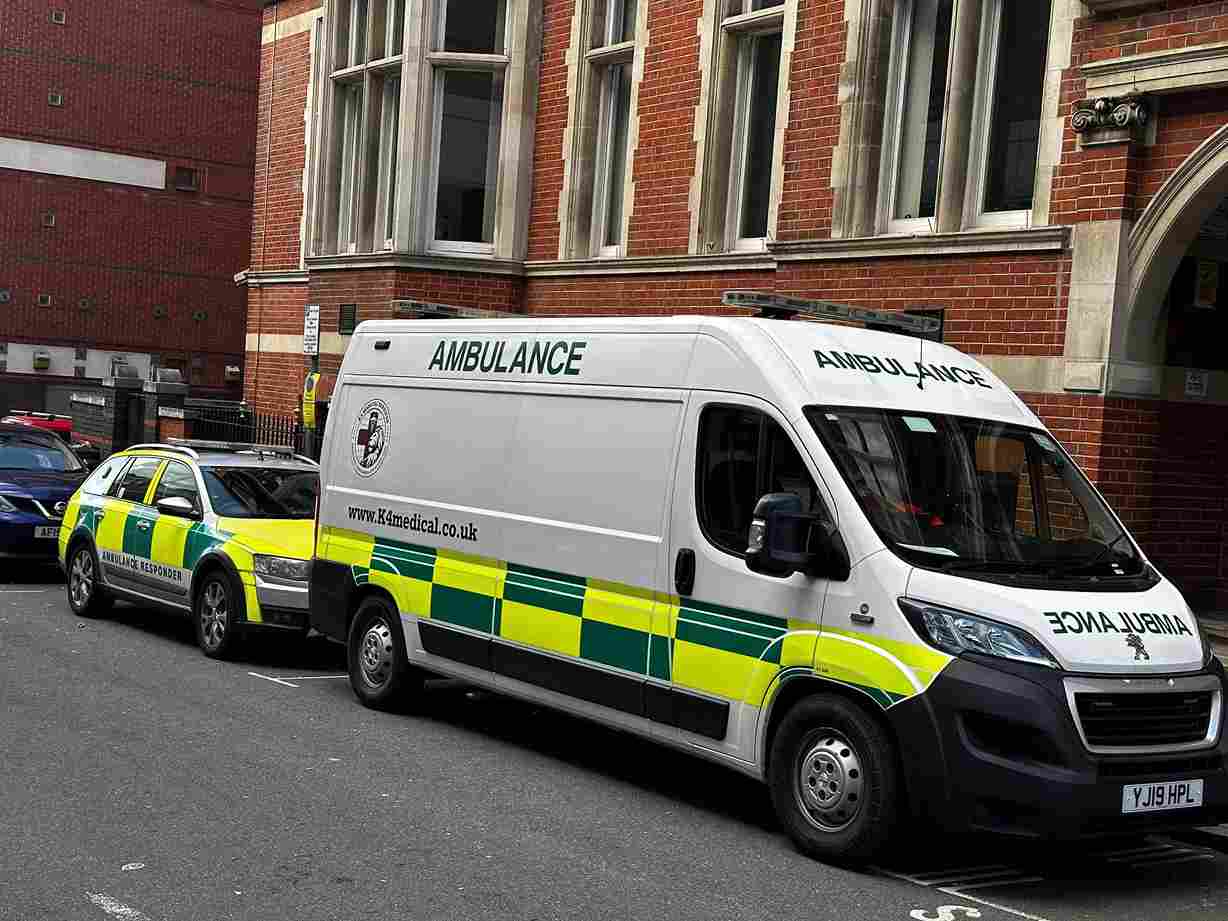
K4 Medical operates a fleet of CQC-registered private ambulances across London and South East England, providing both emergency standby and non-emergency transport services.
Key Differences Between Private and NHS Ambulances
Here is a clear comparison of the two:
Funding and Cost: NHS ambulances are publicly funded and free for patients. Private ambulances are paid for by the individual, their family, or an organisation booking the service. For private ambulance pricing, the cost depends on distance, vehicle type, and level of care required.
Bookings: NHS ambulances are accessed by calling 999 or 112. Private ambulances are booked directly with the provider by phone or online.
Response and Availability: NHS ambulances prioritise calls by clinical urgency. Life-threatening emergencies get the fastest response, but lower-priority calls can face long waits, sometimes several hours. Private ambulances are booked for a specific time and purpose, so the vehicle and crew are dedicated to you.
Type of Service: NHS ambulances primarily handle emergency response and some patient transport. Private ambulances cover a much broader range of services including planned transfers, event medical cover, repatriation, specialist transport, and NHS contract work.
Vehicles and Equipment: Both NHS and private ambulances carry professional medical equipment including defibrillators, oxygen, and trauma kits. The standard of equipment in CQC-registered private ambulances matches NHS clinical standards. Private providers may also offer specialist vehicles such as bariatric ambulances and wheelchair-accessible transport that are not always readily available through the NHS.
Staff Qualifications: NHS ambulances are staffed by NHS-employed paramedics, emergency medical technicians, and emergency care assistants. Private ambulances are staffed by qualified medical professionals with the same clinical registrations, including HCPC-registered paramedics. All staff in CQC-registered private services must meet the same training and qualification standards as their NHS counterparts.
Flexibility: NHS ambulance services operate within a structured system with limited flexibility for individual patient preferences. Private ambulances offer door-to-door service, flexible scheduling, same-day bookings, and dedicated vehicles for individual patients.
When Should You Call 999?
If you or someone nearby is experiencing a life-threatening emergency, always call 999. This includes suspected heart attacks, strokes, severe breathing difficulties, heavy uncontrolled bleeding, loss of consciousness, serious trauma from accidents, and severe allergic reactions (anaphylaxis).
The 999 service is designed for genuine emergencies where there is an immediate threat to life. In these situations, do not wait for a private ambulance. Call them and let the NHS ambulance service respond.
When Should You Use a Private Ambulance?
Private ambulances are the right choice in situations that are medically important but not life-threatening emergencies. In our experience, the most common reasons people use a private ambulance include planned hospital transfers or discharges when NHS transport is unavailable or involves long delays, inter-hospital transfers for specialist treatment at another facility, regular transport to ongoing treatments like dialysis or chemotherapy, care home residents attending hospital appointments, event medical cover where ambulance standby is required on-site, long-distance or cross-border medical transport, and situations where a patient simply needs to get to a hospital but calling is not appropriate.
One thing worth knowing is that every NHS ambulance trust in England uses private ambulance providers under contract to help manage demand. So private ambulances are not an alternative to the NHS. They work alongside it.
For non-emergency medical journeys, K4 Medical also provides dedicated patient transport services across London and South East England.
How Much Does a Private Ambulance Cost?
The cost of a private ambulance varies depending on what you need. Key factors include the type of service (emergency standby, planned transfer, or specialist transport), journey distance and duration, level of clinical care required (first aider, EMT, paramedic, or nurse), time of day (daytime, evening, overnight, or weekend), and whether specialist equipment or vehicles are needed.
For a non-emergency patient transfer within London, costs are typically affordable and competitive. Longer journeys, specialist vehicles, and emergency standby cover for events are priced based on specific requirements.
K4 Medical offers transparent pricing with no hidden charges. Contact us on 020 3143 3998 or request a free quote for an accurate price personalised to your needs.
CQC Registration: Why It Matters
Since 2011, all ambulance providers in England, both NHS and private, must be registered with the Care Quality Commission. This means CQC-registered private ambulances meet the same national standards for safety, quality, patient care, and governance as NHS ambulance services.
When choosing a private ambulance provider, CQC registration should be your minimum requirement. It confirms that the provider has been inspected, that staff qualifications have been verified, that vehicles and equipment meet clinical standards, and that proper clinical governance is in place.
K4 Medical is fully CQC-registered. Learn more about why CQC registration matters for your peace of mind.
Frequently Asked Questions
NHS ambulances are publicly funded, accessed via 999, and focused on emergency response. Private ambulances are operated by independent CQC-registered companies, booked directly, and used for planned transfers, event cover, patient transport, and specialist medical journeys. Both carry qualified medical crews and professional equipment.
You can book a private ambulance for non-emergency medical transport, but for life-threatening emergencies you should always call 999. Private ambulances do not replace the NHS emergency service. They work alongside it for planned and non-emergency medical needs.
Yes. All private ambulance providers in England must be CQC-registered, meeting the same safety and quality standards as NHS services. Staff must be qualified, vehicles must be equipped to clinical standards, and the provider must maintain proper governance and oversight.
Costs vary based on service type, distance, duration, and clinical care level. K4 Medical offers competitive, transparent pricing. Contact us on 020 3143 3998 for a free quote.
Yes. Private ambulance crews include HCPC-registered paramedics, qualified EMTs, and emergency care assistants with the same clinical registrations and training as NHS ambulance staff.
Common reasons include planned hospital transfers when NHS transport has long waits, inter-hospital transfers for specialist care, regular transport to treatments like dialysis, event medical cover, and long-distance or international medical repatriation.