Film sets are unpredictable spaces, especially when it comes to a medical emergency. Long hours, heavy equipment, tight schedules, and physically demanding scenes create an environment where medical incidents happen more often than most people realise. According to the Health and Safety Executive, over 600,000 workers in the UK sustain workplace injuries every year, and film productions carry their own unique set of risks.
Whether you are shooting a low-budget, independent, short or a large-scale TV series, having a trained set medic on site is not just smart. In most cases, it is a legal and insurance requirement.
What Does a Set Medic Do?
A set medic is a qualified medical professional, usually an EMT or HCPC-registered paramedic, who provides on-site medical cover during filming/TV sites. Their job is not just limited to sitting in the corner with a first aid kit.
Before filming starts, a reliable set medic carries out a risk assessment of the location, checks emergency access routes, sets up a treatment area, and briefs the cast and crew members on safety procedures. During the shoot, they remain on standby near the prime areas, ready to respond to anything, from a minor cut to a serious trauma.
What makes a set medic different from a standard first aider is their understanding of production environments. They are professionals who read call sheets, know how to stay out of shot, and work around filming schedules without slowing anything down.
For a full breakdown of what our set medics do on location, see K4 Medical’s film and TV medical services.
The Legal Position of a Set Medic in the UK
There is no single UK law that says “every film set must have a medic.” However, the Health and Safety at Work Act 1974 places a clear duty on production companies to ensure the health, safety, and welfare of everyone on set. In practice, this means carrying out a risk evaluation and providing an appropriate level of medical cover.
For higher-risk productions involving stunts, pyrotechnics, water work, or large crowds, the expectation from health and safety regulators is that trained medical professionals should be present there. The Management of Health and Safety at Work Regulations 1999 reinforces this by requiring employers to assess workplace risks and put suitable measures in place.
What many production companies underestimate is that even a seemingly low-risk shoot, such as a dialogue scene in a studio, still involves heavy equipment, cables, lighting rigs, and long working hours. These carry genuine risks of injury, and a basic risk assessment will usually recommend some form of medical provision.
Insurance Requirements
Most production insurance policies require qualified medical cover on set as a condition of the policy. If an incident occurs, and you did not have appropriate medical provision, your insurer may refuse the claim.
Broadcasters and studios often have their own set of requirements too. The BBC, ITV, and major streaming platforms typically require productions to demonstrate adequate medical cover before filming begins. If you are producing content for a broadcaster, check their specific requirements early in pre-production.
In our experience, one thing worth knowing is that having an experienced set medic can actually reduce your insurance premiums. Insurers recognise that professional medical cover reduces the severity and cost of on-set incidents, hence some offer lower rates for productions that have proper medical planning.
Common Medical Incidents on Film Sets
Film sets may experience a surprising range of medical situations. Some of the most common incidents our medics at K4 deal with includE:
- Cuts and lacerations from set construction, props, or equipment.
- Burns from lighting rigs, pyrotechnics, or hot surfaces.
- Sprains, strains, and musculoskeletal injuries from physical scenes or manual handling.
- Heat exhaustion and dehydration during outdoor summer shoots.
- Allergic reactions to makeup, prosthetics, or atmospheric effects like smoke and haze. Falls from height during rigging or set construction.
- Stress, fatigue, and anxiety during high-pressure shoot days.
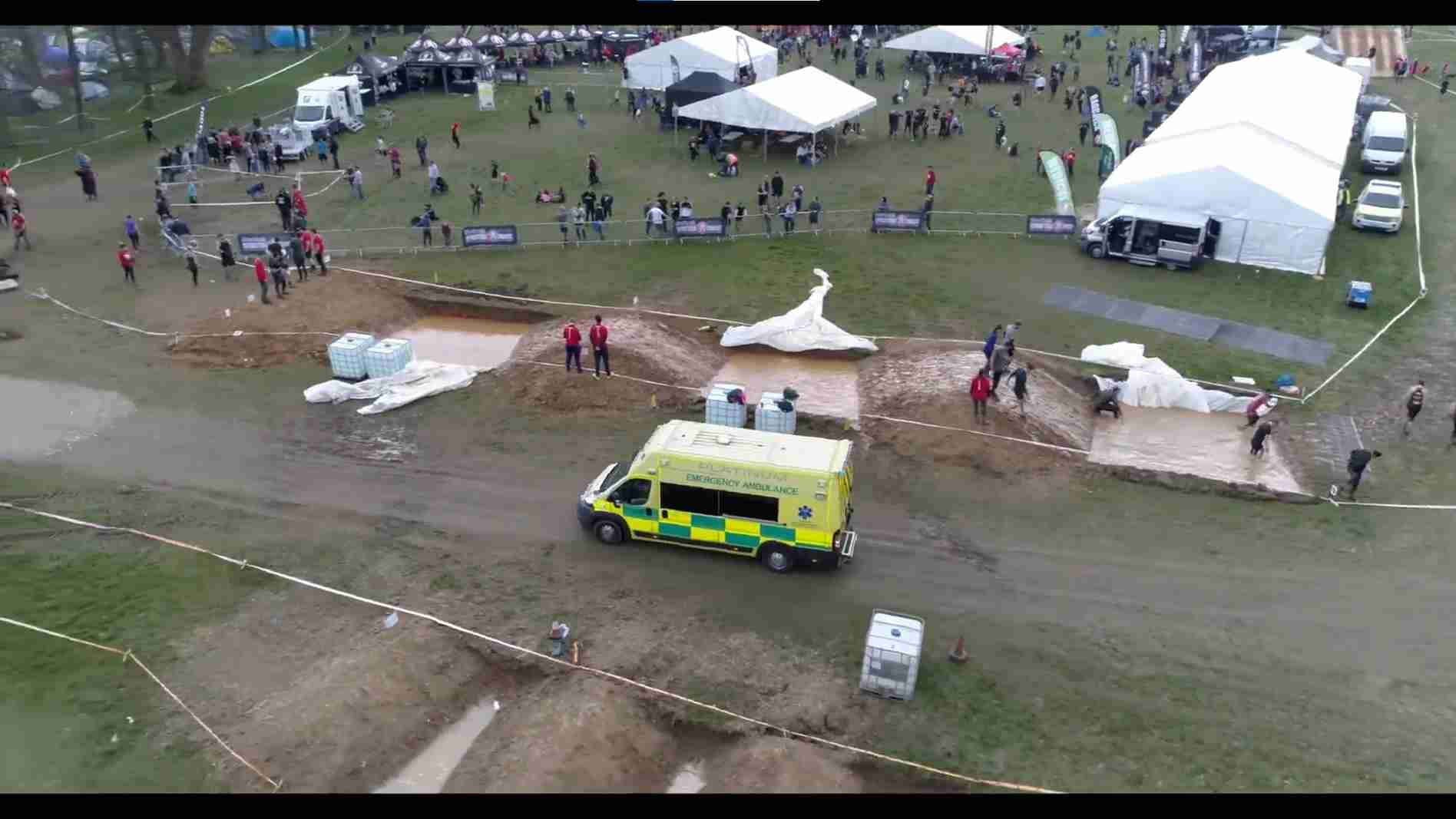
For stunt sequences, the risk profile goes up significantly. Fight choreography, vehicle work, fire, falls, and wire rigs all carry potential for serious injury. Our private ambulance services provide on-set ambulance standby for high-risk productions where rapid evacuation capability is necessary.
What Qualifications Should a Set Medic Have?
Not all medics are equally qualified to work on film sets. Here is what you should look for when hiring one:
At a basic level, a set medic should hold a valid First Aid at Work (FAW) certificate. For most professional productions, an Emergency Medical Technician (EMT) qualification is the standard. For high-risk shoots involving stunts or action sequences, an HCPC-registered paramedic is recommended as they can administer medication, manage trauma, and provide advanced clinical care that goes beyond basic first aid.
All set medics working on UK productions should hold current DBS clearance, professional indemnity insurance, and be experienced in working within production environments. It is also worth checking that they are familiar with call sheets, set protocols, and the specific demands of working on a film or TV set.
When Should You Hire a Set Medic?
The right answer is for every production set. Even if the shoot seems low-risk, having a trained medic on standby protects your crew, satisfies your duty of care obligations, and keeps your insurance valid.
For productions involving any of the following, a set medic is strongly recommended: stunt sequences or action choreography, pyrotechnics, fire, or explosions, water work or underwater filming, working at height, night shoots or extended working hours, large crews or crowd scenes, remote or remote locations far from hospitals, and child performers on set.
For smaller shoots where the risk is genuinely low, a qualified first aider may be adequate. But for anything involving physical activity, special effects, or a crew of more than a handful of people, a professional set medic is the smart choice.
How Much Does a Set Medic Cost?
The cost of hiring a set medic varies according to the number and length of the shoot days, the level of qualification required, and whether you need additional equipment such as ambulance standby. For a standard shoot day with a single qualified medic, costs are competitive and comparable to hiring any other specialist crew member.
To put it in perspective, the cost of a set medic for a full day is a fraction of what a single hour of production delay would cost if someone gets injured and there is no medical professional to respond. It is one of the smartest investments you can make.
For a free quote based on your production schedule, contact K4 Medical on 020 3143 3998 or request a quote.